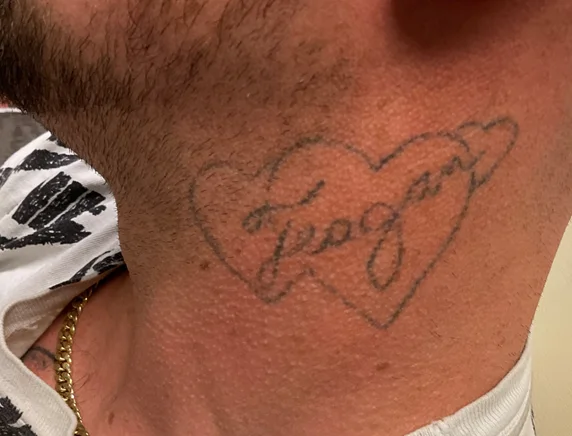
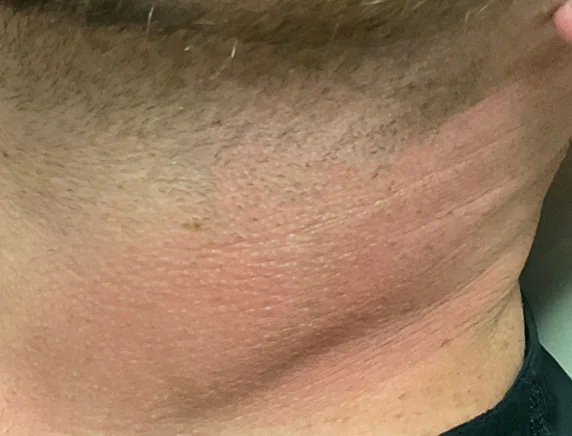
8 monthsNeck
Remove a tattoo completely, lighten it for a cover-up, or take off part of one. We treat every ink color on all skin tones with the Quanta Q-Plus C laser.
A Q-switched laser sends a powerful pulse of light into the ink. The pigment absorbs it and breaks into fragments small enough for your body to remove.
We look at the size, colors, age and location of your tattoo, then give you a plan and a price before you start.
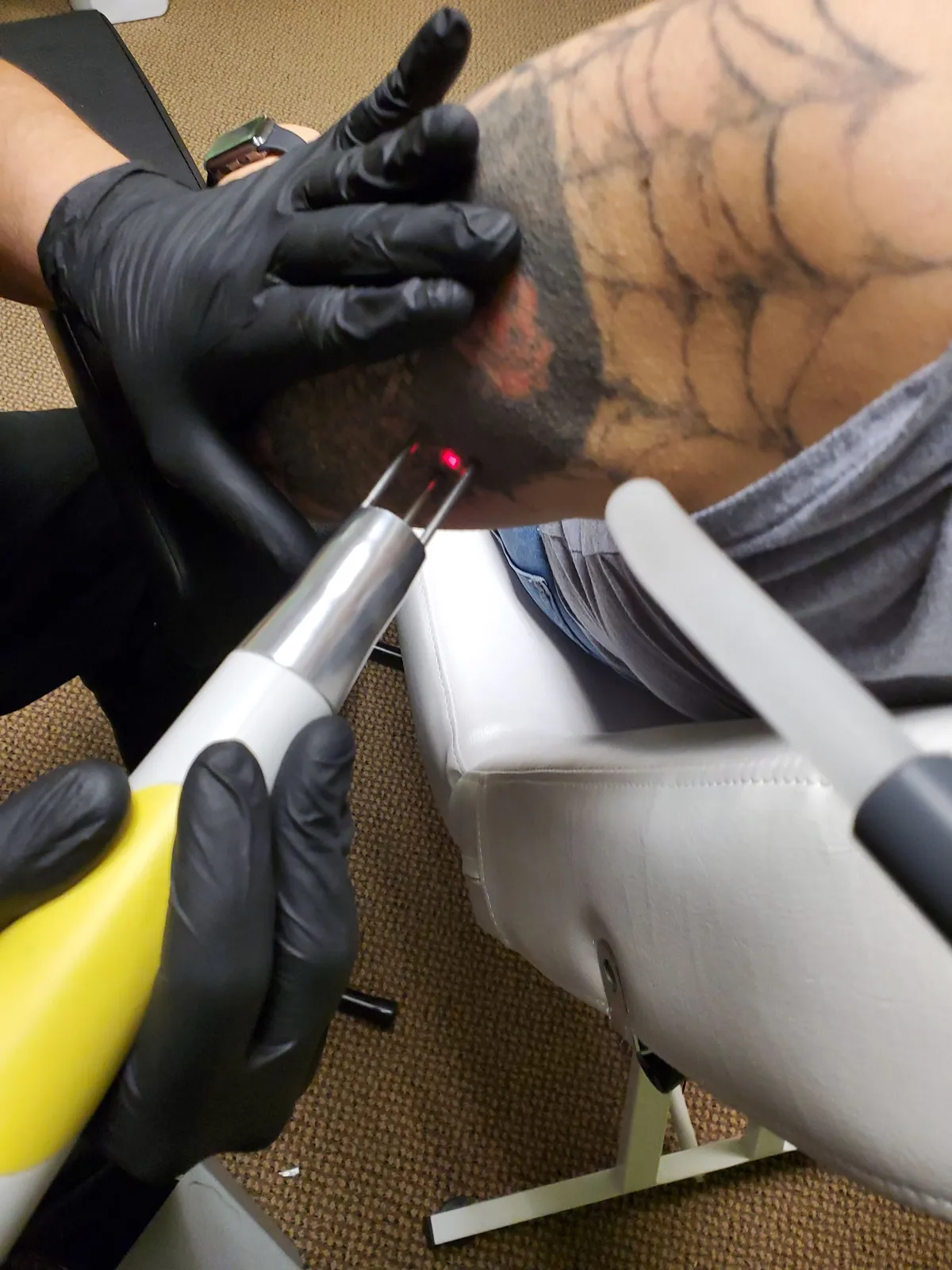
The Quanta Q-Plus C sends short pulses into the ink. Most sessions take 5 to 30 minutes, with numbing cream or Pro-Nox if you want it.
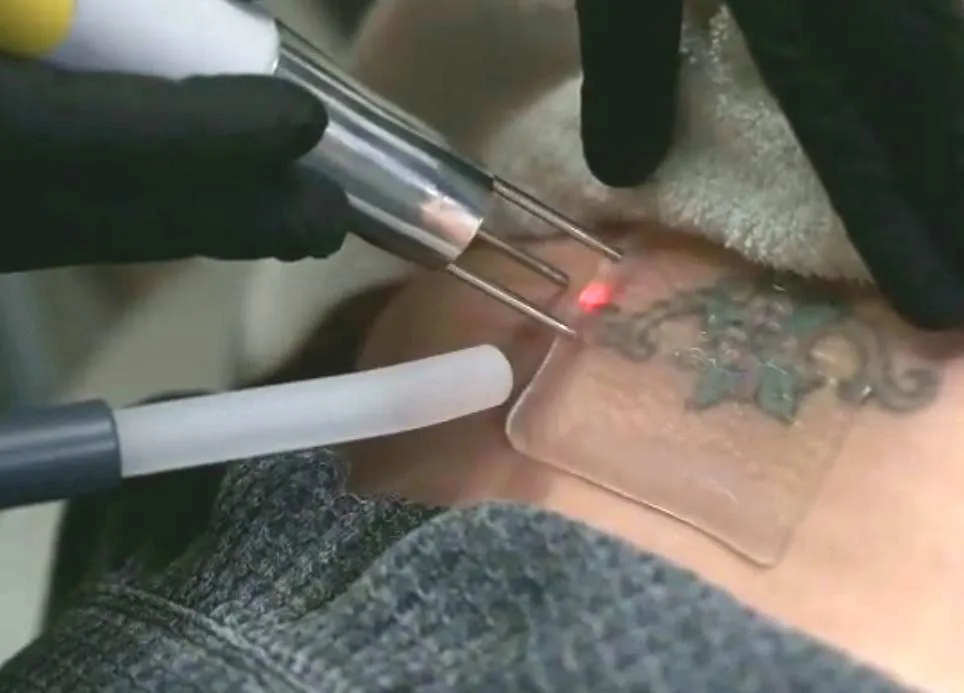
Over the following weeks your lymphatic system carries the fragments away and the tattoo fades. Sessions are spaced 4 to 8 weeks apart to give it time.
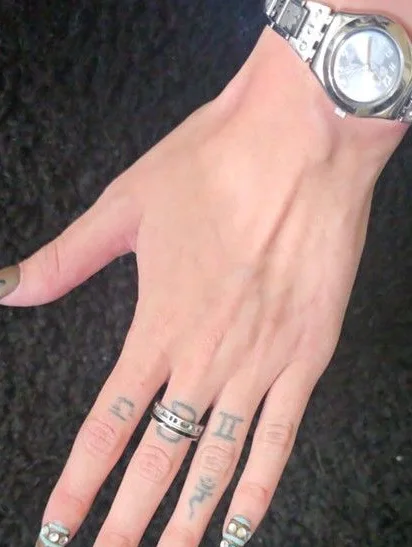
Larger, older and more colorful tattoos take more sessions. Packages of 3, 6 or 9 sessions save 10 to 20%.
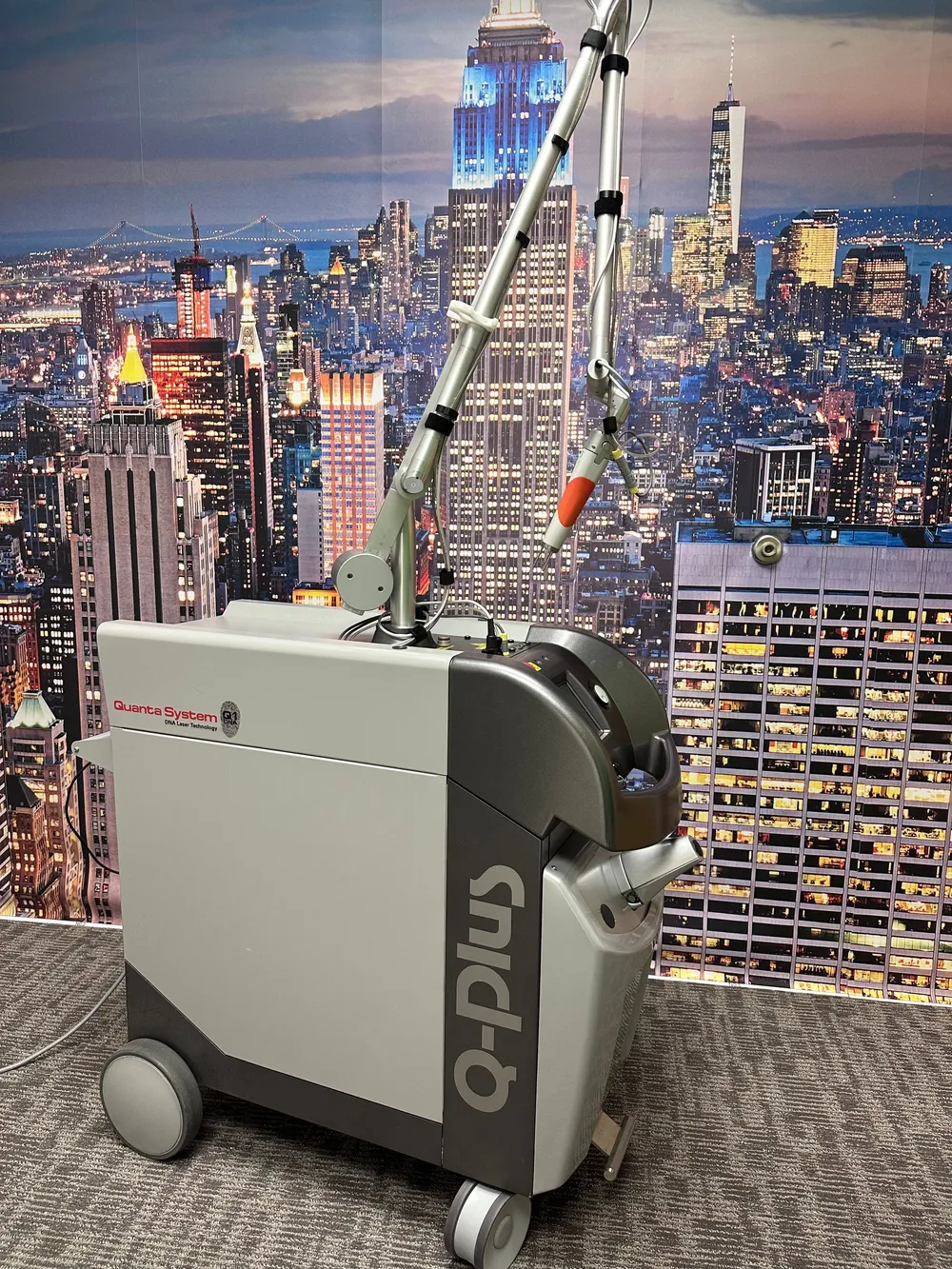
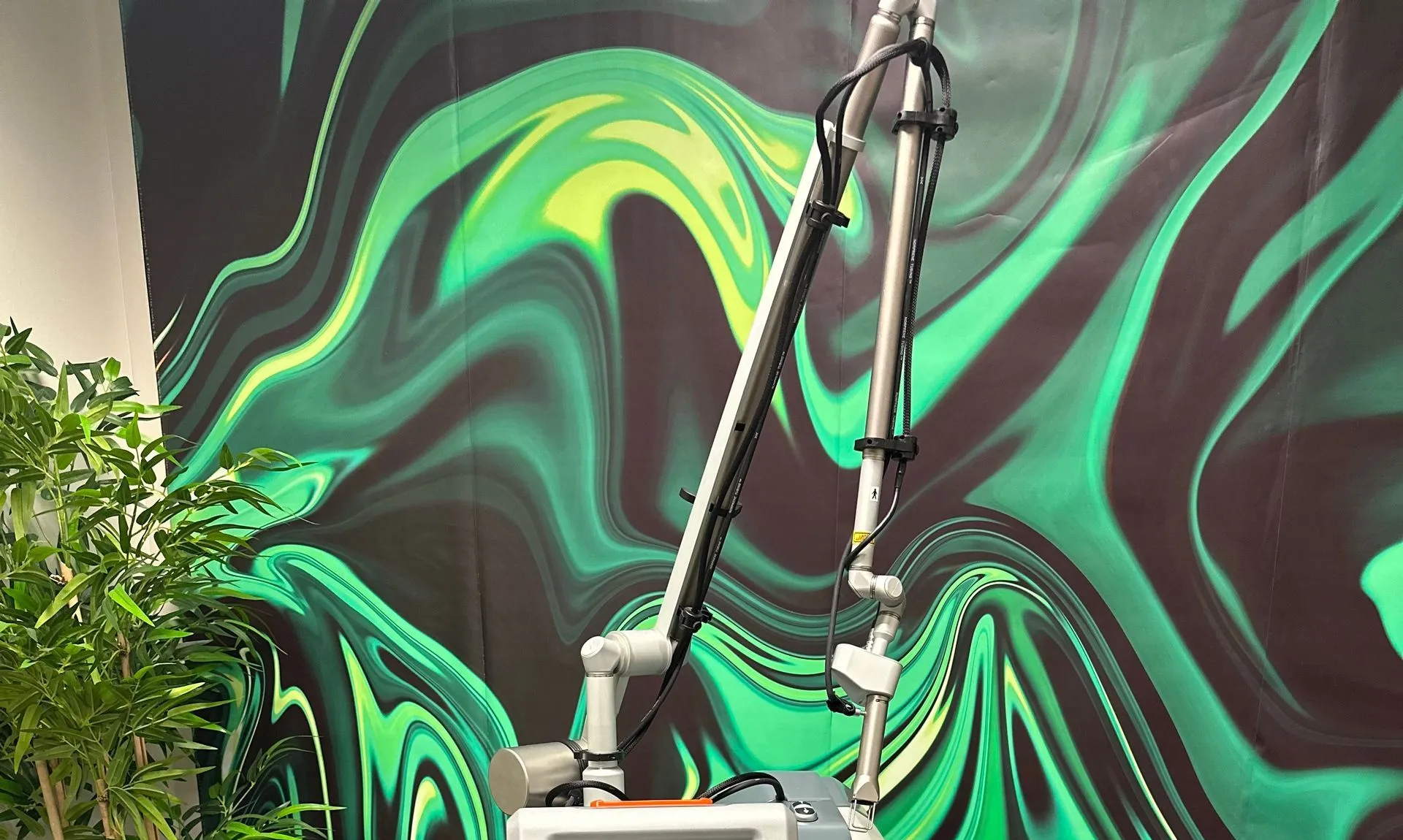
Kryptonite uses the Quanta Q-Plus C, an FDA approved Q-switched laser trusted by dermatologists and skin specialists.
It is accurate, so the ink is targeted with minimal damage to the surrounding skin, and it is fast. Most sessions last 5 to 30 minutes depending on the size and detail of the tattoo.
Nanosecond pulses reach the pigment and break it apart without harming nearby tissue, which means less discomfort and faster healing.
The Q-Plus C is effective on light to dark skin tones, so people who worry about burns or discoloration can be treated safely.
Photos from real clients of our Colorado Springs clinic. Swipe or use the arrows.
8 monthsNeck
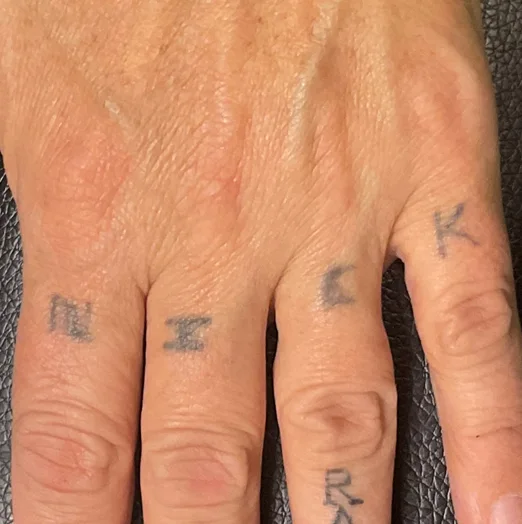
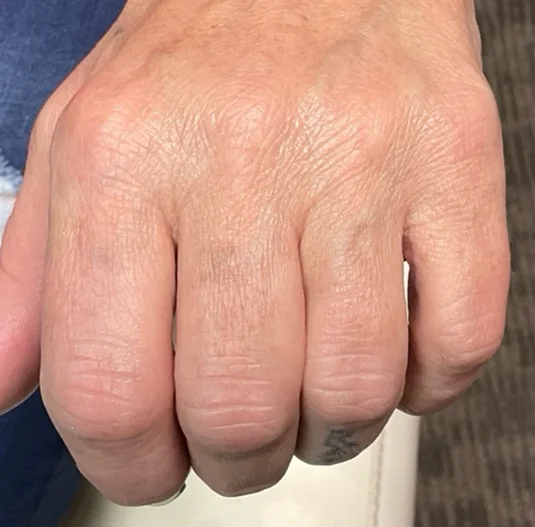
4 treatmentsKnuckles
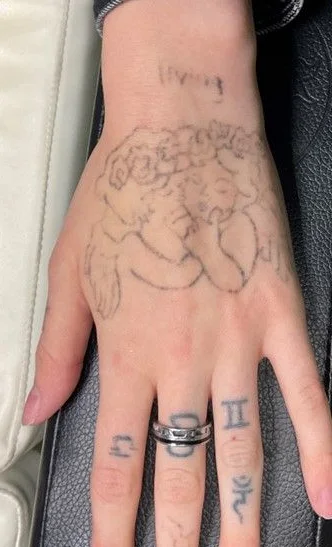
7 treatmentsBack of hand
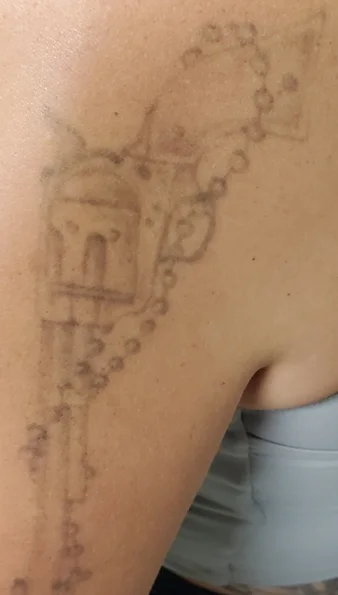
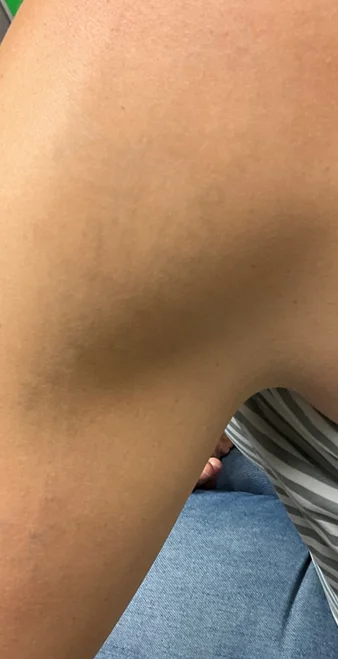
Upper arm
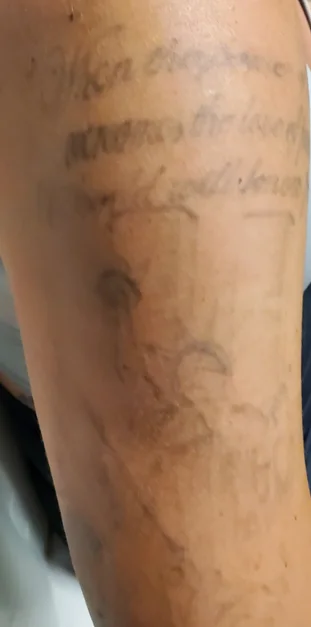
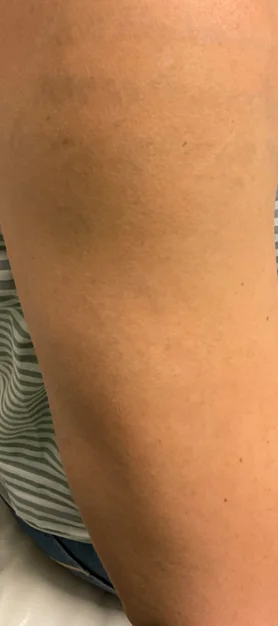
Forearm
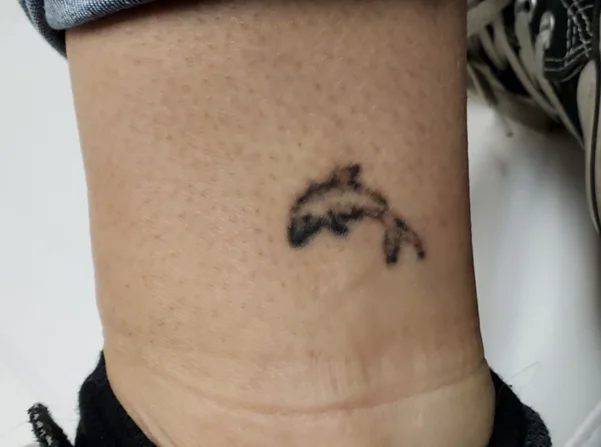
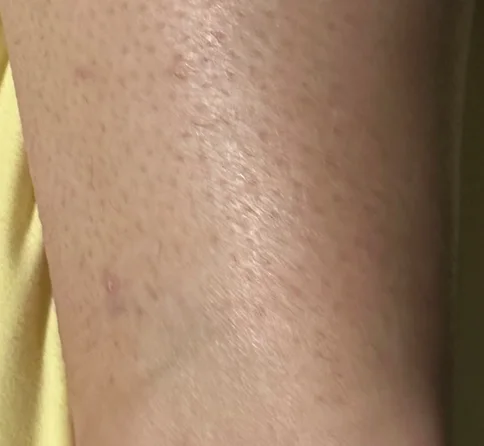
Ankle
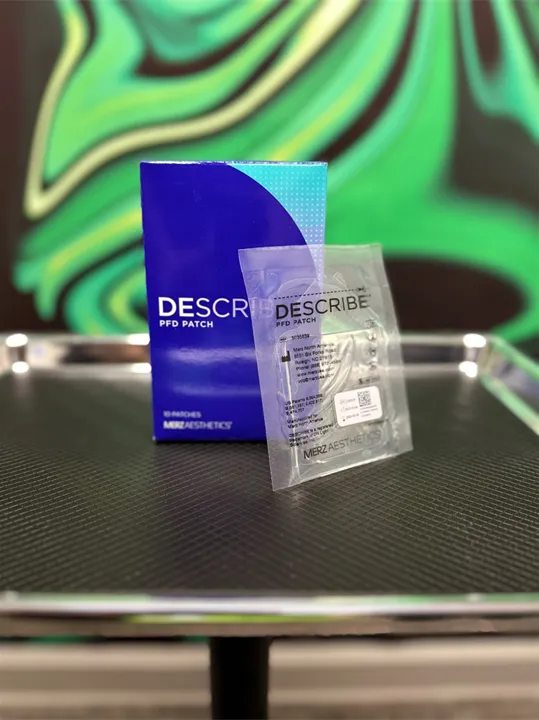
The DESCRIBE PFD Patch is a square of silicone infused with perfluorodecalin. It stops the white frosting that normally forms on the skin after a laser pass, so your technician can treat the tattoo several times in one session instead of once or twice.
The liquid also helps the laser reach ink sitting deeper in the skin, which makes a real difference on older tattoos. Many clients report less pain, swelling and redness when the patch is used.
The patch adds a cost per session, but because it often means fewer sessions overall, it can lower the total. More on comfort options
We offer discounts for military recruits, active duty service members and retired veterans.
Branch tattoo policies change. Confirm the current rules with your recruiter or command.
Most permissive Updated 2015, revised 2022
The Army is widely considered the most tattoo-permissive branch after its major 2015 policy revision, which rolled back restrictions that had been tightened in 2006. As of 2026, the Army allows:
Permissive Updated 2016
The Navy's 2016 policy overhaul dramatically expanded what's allowed, driven by the same recruiting logic that pushed the Army's revision: too many qualified candidates were being turned away for tattoos in locations that had nothing to do with job performance. As of 2026, the Navy allows:
Most restrictive Updated 2016 (strictest revision)
The Marine Corps is the strictest branch on tattoos, by a significant margin. The Corps deliberately maintains a highly professional public image and applies standards well beyond the baseline prohibitions. As of 2026:
The Marine Corps' logic is consistent: the Corps believes its brand requires a visual standard that other branches don't impose, and they are willing to lose recruits over it. If you have sleeve tattoos or tattoos on the outer upper arm, the Marine Corps is likely not your branch without removal or significant cover-up surgery.
Permissive Updated 2022
The Air Force took meaningful steps toward a more permissive policy in 2022, aligning closer to the Army and Navy than to the Marine Corps or Coast Guard. As of 2026:
Follows Air Force policy Established 2020
Space Force, established as an independent service in 2019 and stood up operationally in 2020, inherited the Air Force's personnel regulations as its parent service. For tattoo policy purposes, Space Force and the Air Force are governed by the same rules. As of 2026:
One practical note: Space Force is the smallest and most selective branch (approximately 9,000 Guardians as of 2026). Competition for Space Force slots is intense, and borderline tattoos, even if technically within policy, may be scrutinized more carefully simply because the applicant pool is smaller and competition is higher. Tattoo policy compliance is one less potential concern to bring to a very competitive selection process.
Restrictive Similar to Marine Corps standards
The Coast Guard applies tattoo standards closer to the Marine Corps than to the Army or Navy. As one of the smaller, more selective services, the Coast Guard prioritizes professional appearance across all duty contexts: maritime law enforcement, search and rescue, and port security all involve regular civilian contact. As of 2026:
The Coast Guard also has one of the most competitive enlistment processes of any branch. A relatively small authorized end strength combined with high applicant interest means recruiters have more options. Tattoos on the fence should be disclosed early and discussed honestly with a recruiter before investing time in the MEPS process.
Your exact price depends on the size and colors of your tattoo. We give you a plan and a price at your free consultation.
Per treatment
From $99
Pay for each session as you go.
Session packages
Up to 20%
All inclusive
One price
Based on your evaluation. However many sessions it takes, you are not charged again.
Each package includes one tattoo. Additional tattoos are priced separately. Military discounts available.
Still unsure? Call us or book a free consultation and ask in person.
Yes, when it is performed by a qualified professional with laser experience. You may feel some discomfort from the heat of the laser, and there may be swelling or redness around the area afterward. These effects resolve over time.
It varies from person to person. Size and location of the tattoo, your skin type, and the colors of ink all matter. Larger tattoos need more treatments than smaller ones, and even small tattoos usually need more than one session. We estimate your number at the free consultation.
Yes. Our Quanta laser has wavelengths for every color. Some colors come out more easily than others, and we will talk through yours at your consultation.
There can be discomfort during treatment from the heat of the laser, and some redness or swelling afterward that settles with proper aftercare. Any cosmetic procedure carries some risk of scarring or discoloration. Experience and the right laser settings keep that risk low.
Protect the area from the sun. Wear SPF 50 or higher whenever you are outdoors and avoid tanning beds until your treatments are complete. Avoid blood thinners such as aspirin before appointments, and check with your technician first if you are unsure about a medication.
Treatments start at $99 per session. If you expect several sessions, a package of 3, 6 or 9 sessions saves 10%, 15% or 20%. The all inclusive plan gives you one price based on your evaluation, so you are not charged again no matter how long it takes. Each package includes one tattoo; additional tattoos cost extra.
Bring the tattoo, the scar or the question. We will tell you how many sessions it takes and what it costs.